
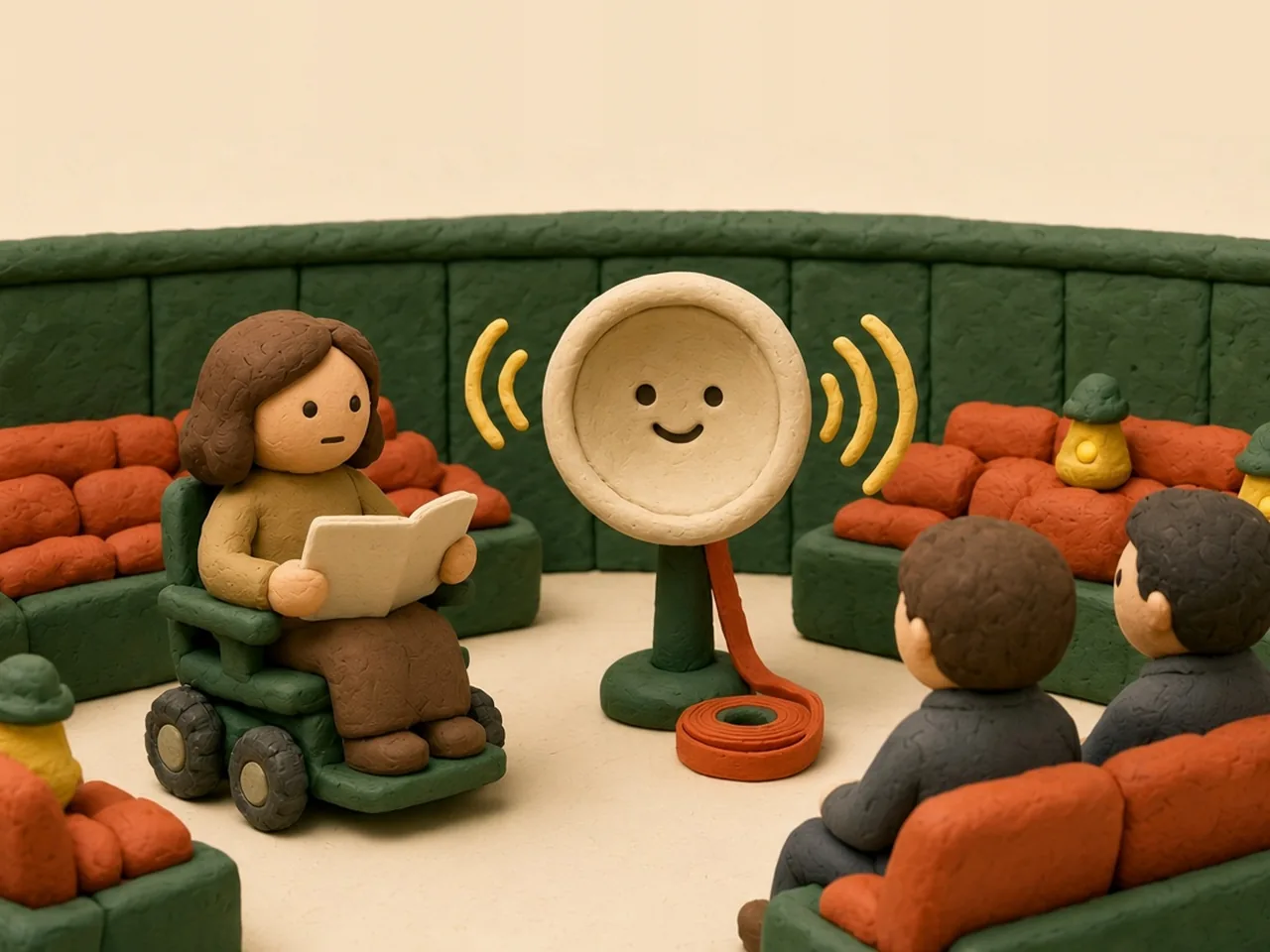
On the afternoon of October 13, the House of Lords was starting a long debate on the Health Bill. First, the Chief Whip announced that Baroness Jane Campbell would speak using an AI-generated voice, and that she should get some leeway on time. The chamber answered: “Hear, hear!”
Campbell, 67, has spinal muscular atrophy and has campaigned for disabled people’s rights for more than 40 years. Her voice has weakened over time. Since 2012 she has been the only peer allowed to bring a personal assistant into the chamber to read her words, a break from a rule dating to 1707.
The clever bit
The clever bit is where the voice came from. Campbell uploaded old recordings of herself, including a 2012 BBC radio interview, to ElevenLabs’ voice-cloning tool, which copied her tone, rhythm and pitch. She wrote the speech, and the tool turned it into audio that played in the chamber. Older methods meant recording almost 400 sentences before losing your voice, and the result sounded robotic, an ElevenLabs speech therapist told AFP.
In 2012, I needed another person to speak my words for me, when I tired. In 2026, I can use technology to speak them directly.
— Baroness Campbell of Surbiton, crossbench peer, House of Lords, via independentliving.co.uk
She opened by introducing peers to “Baroness Campbell mark 2,” then made her case for personal health budgets, the NHS funding she relies on for her own support. The next speaker, the Bishop of Newcastle, noted “the historic nature of her excellent speech.”
Hooray
Hooray: after years of having others read her words, Baroness Campbell argued her case to Parliament in her own voice.
What comes next
The Lords Procedure Committee has agreed she can record future speeches in advance with the AI voice, as a reasonable adjustment under the Equality Act. Campbell hopes other disabled people who struggle with public speaking will see that it “does not have to be a barrier to inclusion at the highest level.”