
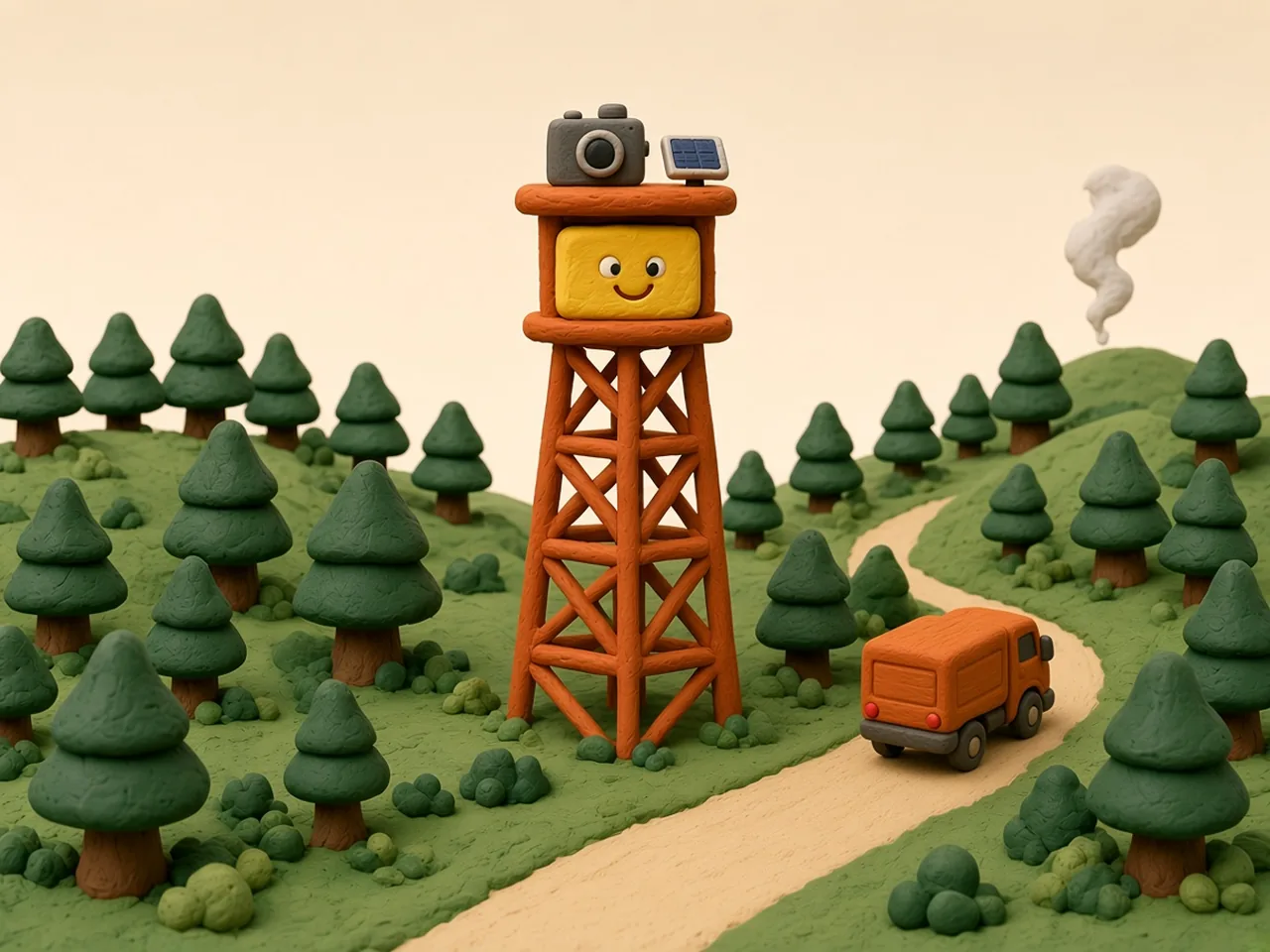
Chile’s wildfire season opens in September, and the minutes between the first wisp of smoke and the first alert decide a lot: a fire spotted early can be contained, and one spotted late can outrun any response. In April 2023, CENIA researchers led by Valentín Barriere and Cristian Buc were still looking for support to bring a camera-based smoke detector to Chile, developed with the French nonprofit Pyronear. Patchy rural internet, a lack of local training data and cost all stood in the way.
The clever bit
The AI runs on a small computer up on each tower, so nothing streams video. Cameras sweep the horizon, and when the model sees a column of smoke it sends only the picture, the time and the location. That works over weak mobile signal or satellite internet, with solar panels where there’s no power line. The model judges a short run of frames instead of one photo. In the team’s peer-reviewed tests, that caught about 10% more smoke plumes with almost no loss in precision, and flagged fires about 35 s sooner on average.
Hooray
One pilot tower on Cerro Gupo in the Maule region in October 2024 has grown into 42 stations and 106 cameras across six regions, from O’Higgins to Magallanes, watching about 15,000 km². Alerts reach CONAF’s control centers in under a minute, where staff check the image and decide whether to send crews. Each station’s gear costs around 3.5 million Chilean pesos and goes on towers that already exist.
Every confirmed alert and every false alarm from dust, fog or low cloud goes back into training, and updates reach all the towers remotely. The network has captured more than 2.2 million images, almost 30 times the 75,000-image Chilean dataset it started with. In La Araucanía, CONAF signed agreements with five municipalities and the Curarrehue fire brigade to add more AI cameras.
What comes next
On October 29, the team showed its results to CONAF’s fire operations chiefs from 12 regions and proposed a national early-detection system. For the 2027 season, CENIA wants to push the network into the highest-risk areas.