
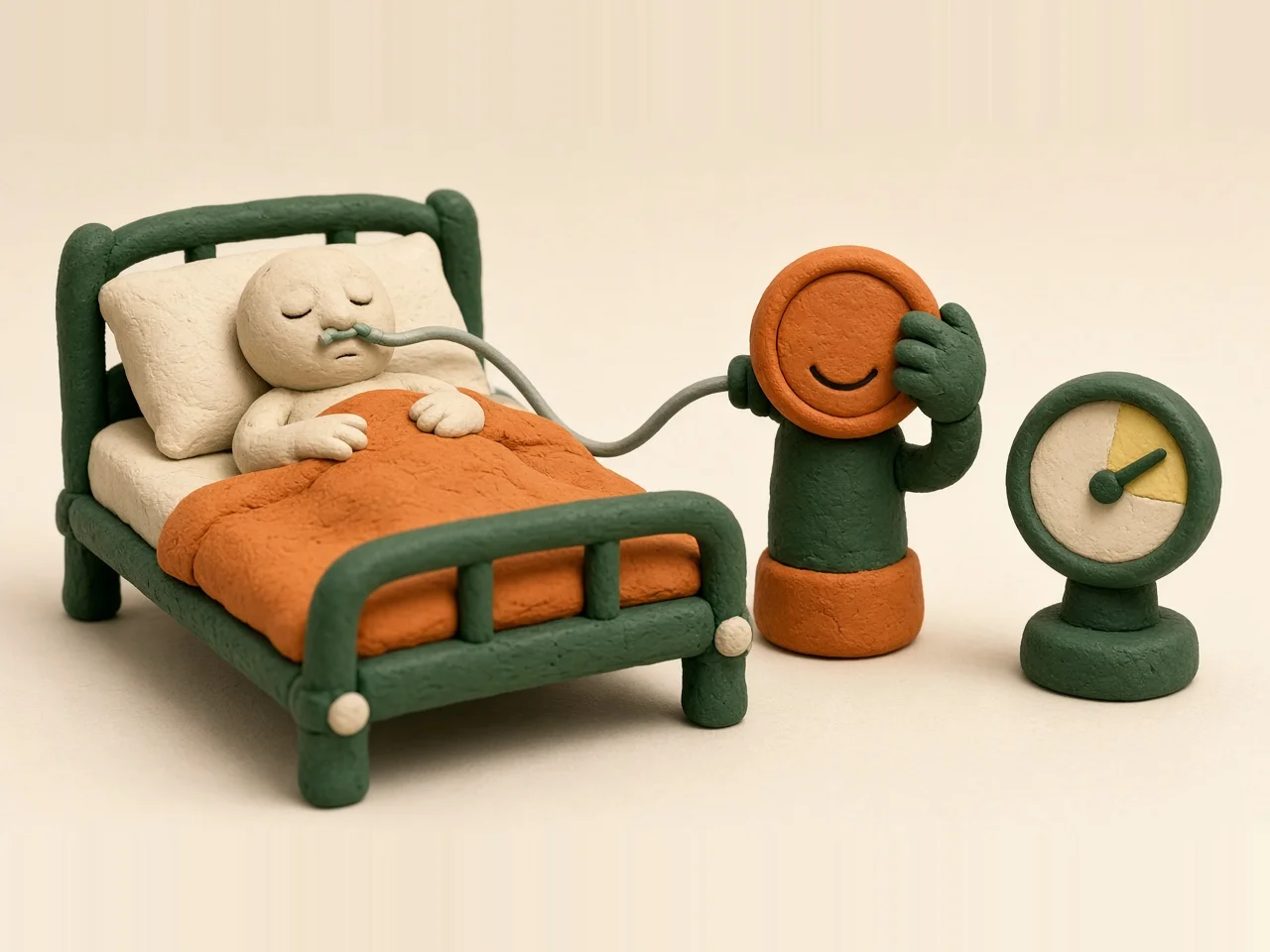
Hospital oxygen is usually turned up or down by hand, every few hours. Between those checks, patients can drift too high or too low. The SAVE-O2 AI trial asked whether a closed-loop dial that watches a pulse oximeter and nudges the flow on its own could keep people in the middle more of the time.
Researchers enrolled 300 adults at four U.S. hospitals who were on 1 to 10 liters of oxygen for acute respiratory illness, trauma, burns, or surgery. Half received the O2matic PRO100 autonomous titrator for up to 72 hours; half stayed on usual manual titration. Both groups aimed for the same SpO2 target of 93 percent, with an acceptable range of 90 to 96 percent.
The clever bit
The clever bit is a trend-based controller: the device reads SpO2 from its own oximeter and continuously adjusts oxygen flow between 0 and 15 liters per minute to stay inside the target band, using the lowest flow that works. Clinicians still set the target; the dial does the frequent nudging between bedside checks.
Patients with the automatic dial spent a mean 85 percent of observed time in the target range, versus 63 percent with usual care—an adjusted difference of 21 percentage points. Time in hypoxemia (SpO2 under 88 percent) fell from 3.6 percent to 2.0 percent. Time above 96 percent also dropped sharply.
Hooray
Hooray: 85 percent of the time in the oxygen sweet spot, up from 63 percent with hand titration—in a 300-person multicenter randomized trial.
What comes next
The trial was unblinded, used one device model, and did not find differences in mortality or hospital-free days. The PRO100 was not FDA-cleared during the study and ran under an investigational device exemption. Pulse oximeters have known limits; the controller tracks the meter, not true arterial oxygen. What comes next is regulatory review and tests of other devices in everyday wards.