
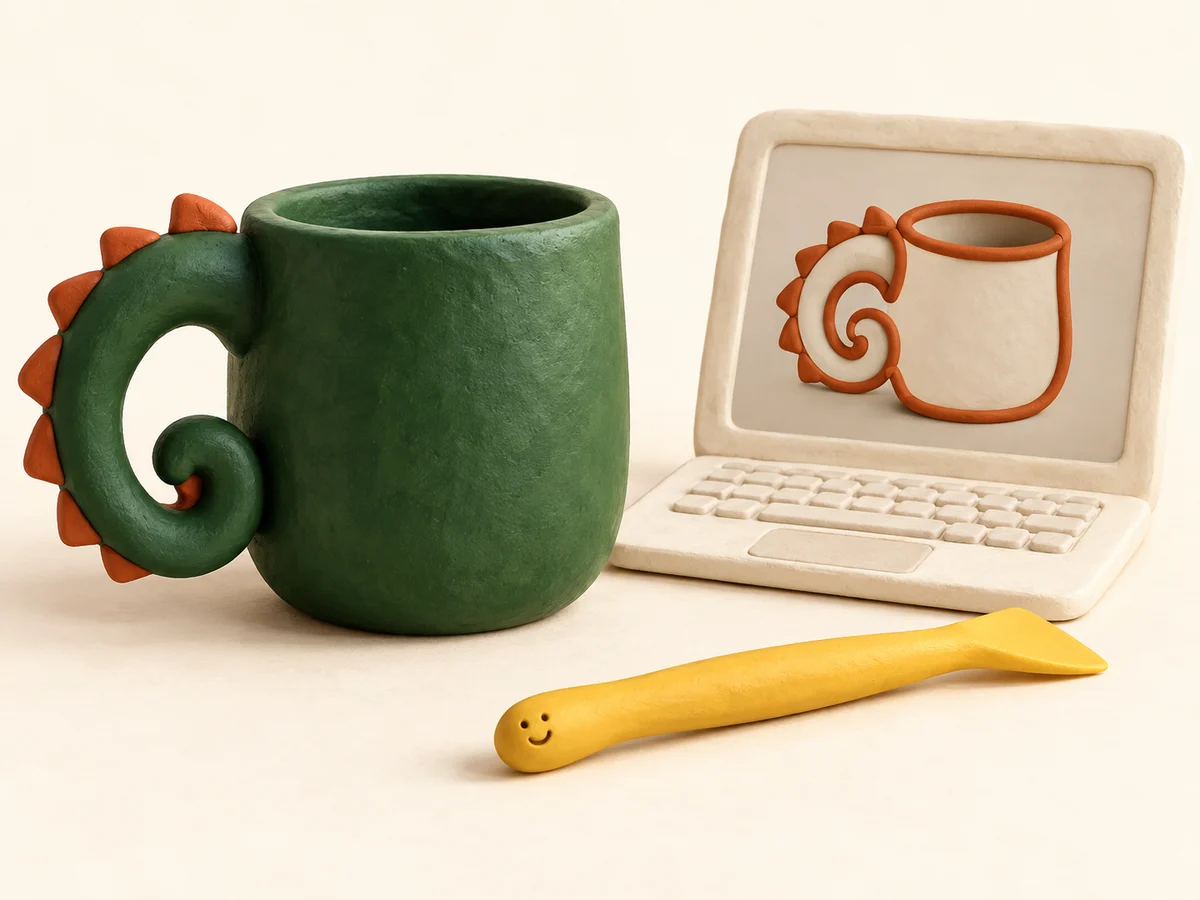
Ask an AI model for a 3D-printable mug and you may get a lovely cup that can't hold your coffee. As MIT researchers put it, these models understand how an object should look, but not how it works. Fixing the result usually means wrestling with 3D design software, which is a steep climb for anyone who has never used it.
The clever bit
InstructMesh, built by researchers at MIT CSAIL, Google and Northeastern University, lets people point at the part that's wrong and say what they want. A user highlights a region of the AI-made model, then asks for a change in plain words or nudges a slider. Behind the scenes, one AI system generates the shape and a language model turns each request into a fixed set of editing steps, which the user approves.
In the team's first user study, 12 beginners worked through AI-generated designs with 156 flaws between them. An independent expert judged that 89.7% of those flaws were repaired. A second 12-person study compared ways of giving instructions, and the team printed playful examples to show the edited designs could leave the screen.
Hooray
People with no 3D modeling background were able to take a flawed AI design and steer it toward something they could actually print, using the words they already have. That's a friendlier on-ramp to making things, from household items to small accessories.
What comes next
The paper is set for the UIST 2026 conference and is available as an August author manuscript. People still have to notice the flaws themselves. The study didn't compare InstructMesh with other repair workflows, the printed objects were demonstrations rather than systematic tests, and hidden defects and moving parts were outside what the team evaluated.