
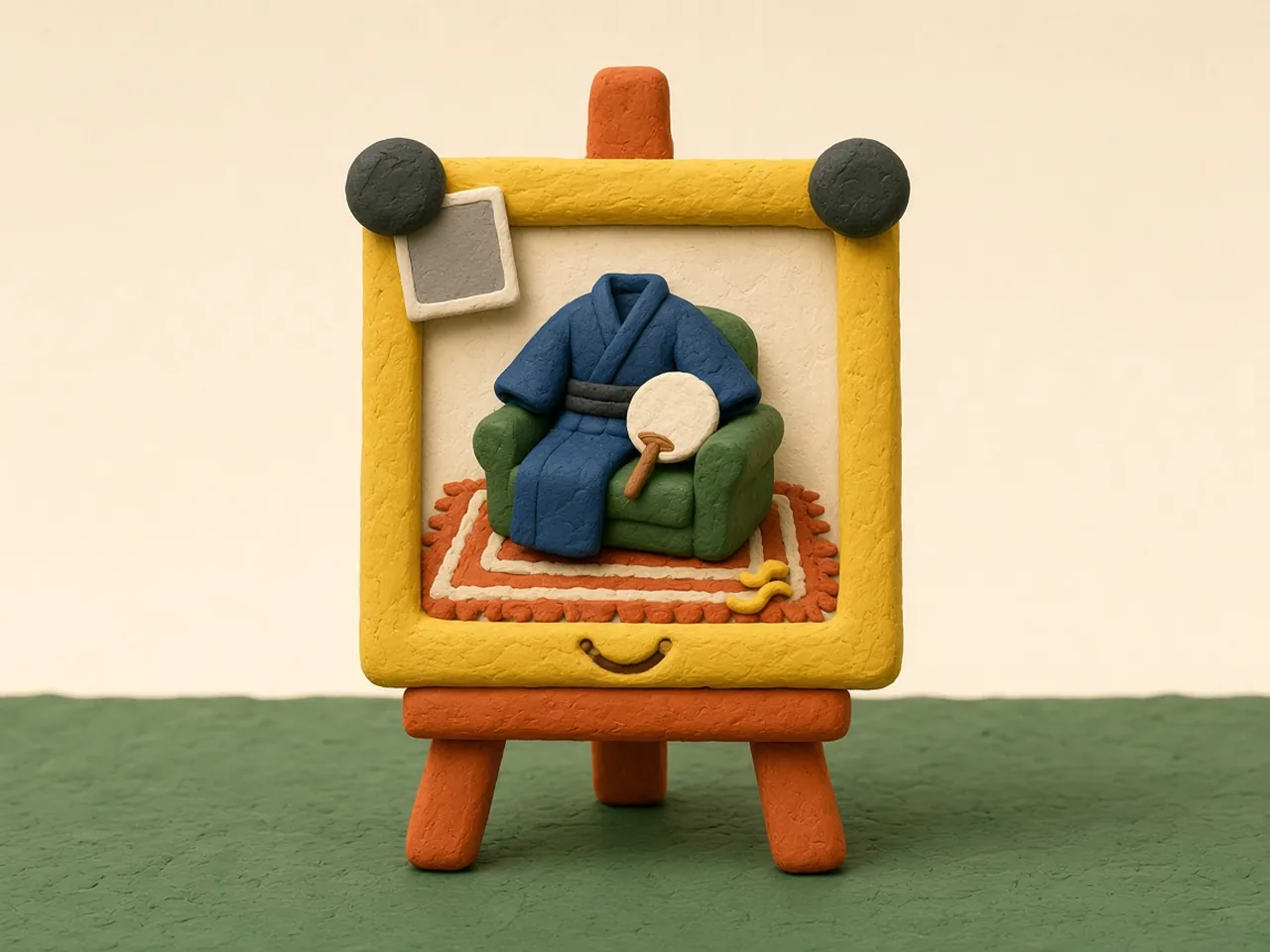
Around 1888, William Merritt Chase painted a woman reclining in a deep blue kimono, holding an uchiwa fan in a richly decorated room. A Comfortable Corner, also called The Blue Kimono, belongs to the Parrish Art Museum in Water Mill, New York. At least two restorations changed it over the years, including a big one in the 1960s. Between them they left a heavy, burlap-like lining, blotchy inpainting and uneven varnish, and the visible picture seems to have shrunk. Before cleaning, someone had to work out which marks were Chase’s.
The clever bit
Suzanne Siano’s team at Modern Art Conservation in New York had one good clue: a black-and-white photo thought to predate the 1960s work. It showed more of the picture than survives, plus a curl of hair under the sitter’s ear and parts of a decorative screen that later faded or vanished. The team used AI to merge that photo with a colour image of the painting into one composite that marks where the two disagree. Siano says they could have built it in Photoshop, but the AI got there considerably faster.
Hooray
The composite pointed the conservators to spots worth a closer look. Among the finds was Chase’s own signature, so faint that some of its letters sat under later overpaint. Because his lettering is fairly abstract, Siano thinks an earlier restorer took it for part of the carpet pattern. On November 14, 2026, the painting went back on public view for the first time since its treatment, in the Parrish show on Chase and Walter Granville-Smith, which runs until March 21, 2027.
Tasks that once took considerable time can be completed more quickly, and AI can provide additional information for us to weigh.
— Suzanne Siano, owner and chief conservator, Modern Art Conservation, via theartnewspaper.com
What comes next
Siano expects AI’s part in deciding how to treat a painting to stay case by case, but sees it growing as a research helper, for example in tracking down old photos and source material. Visitors can judge the work themselves: the exhibition shows photos and video from before, during and after the treatment, next to the painting.